 Image 1 of 4
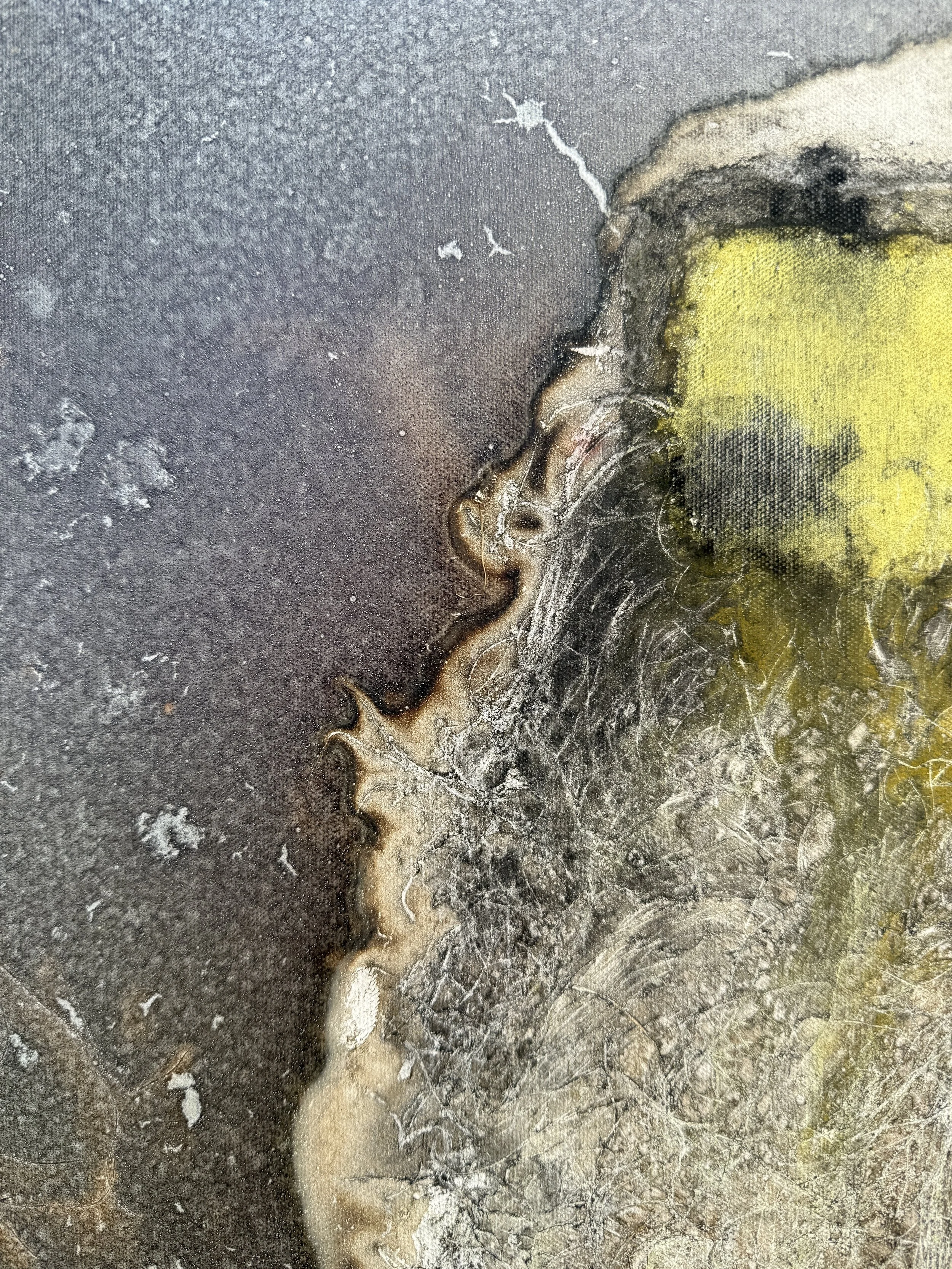 Image 2 of 4
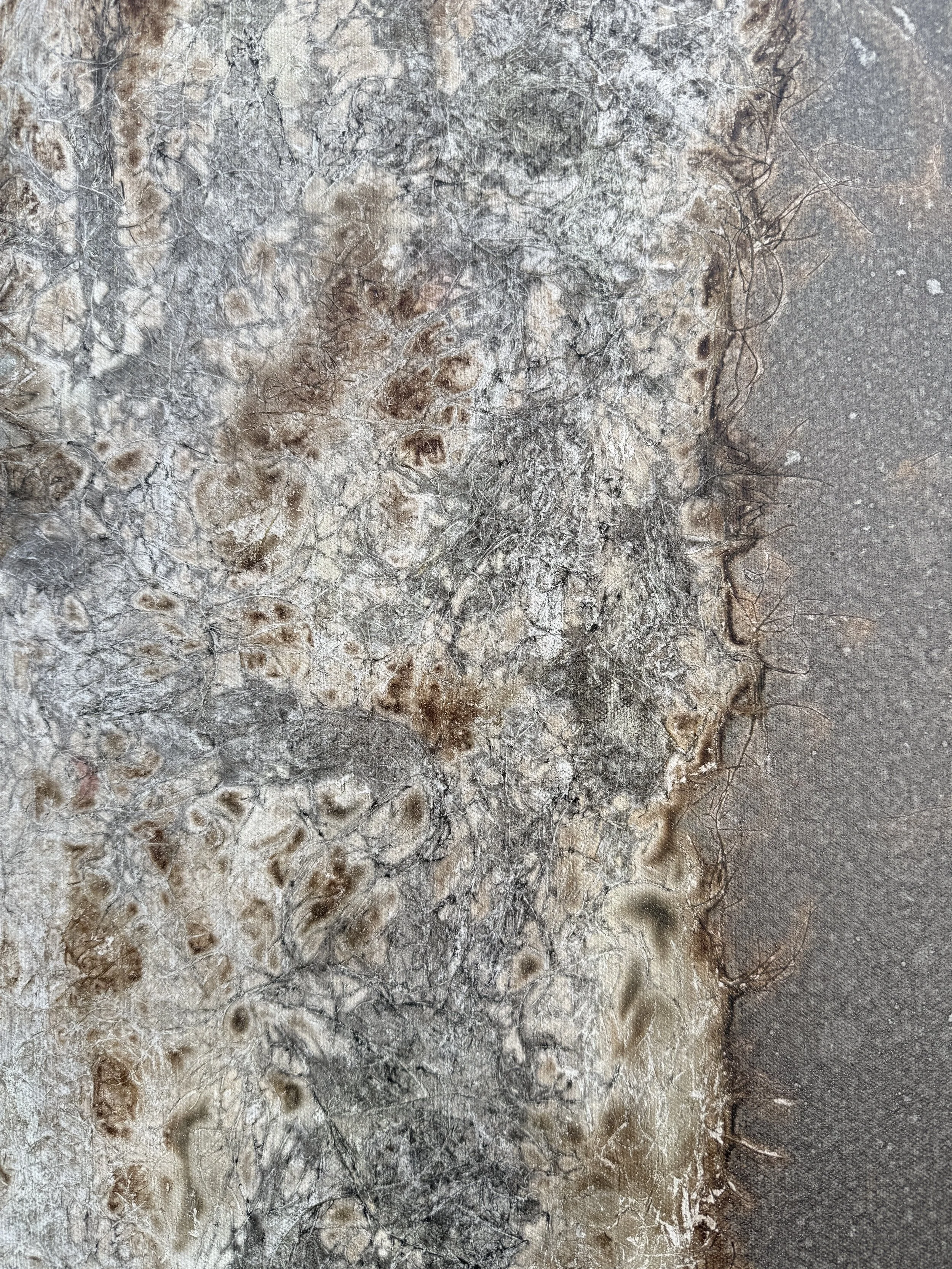 Image 3 of 4
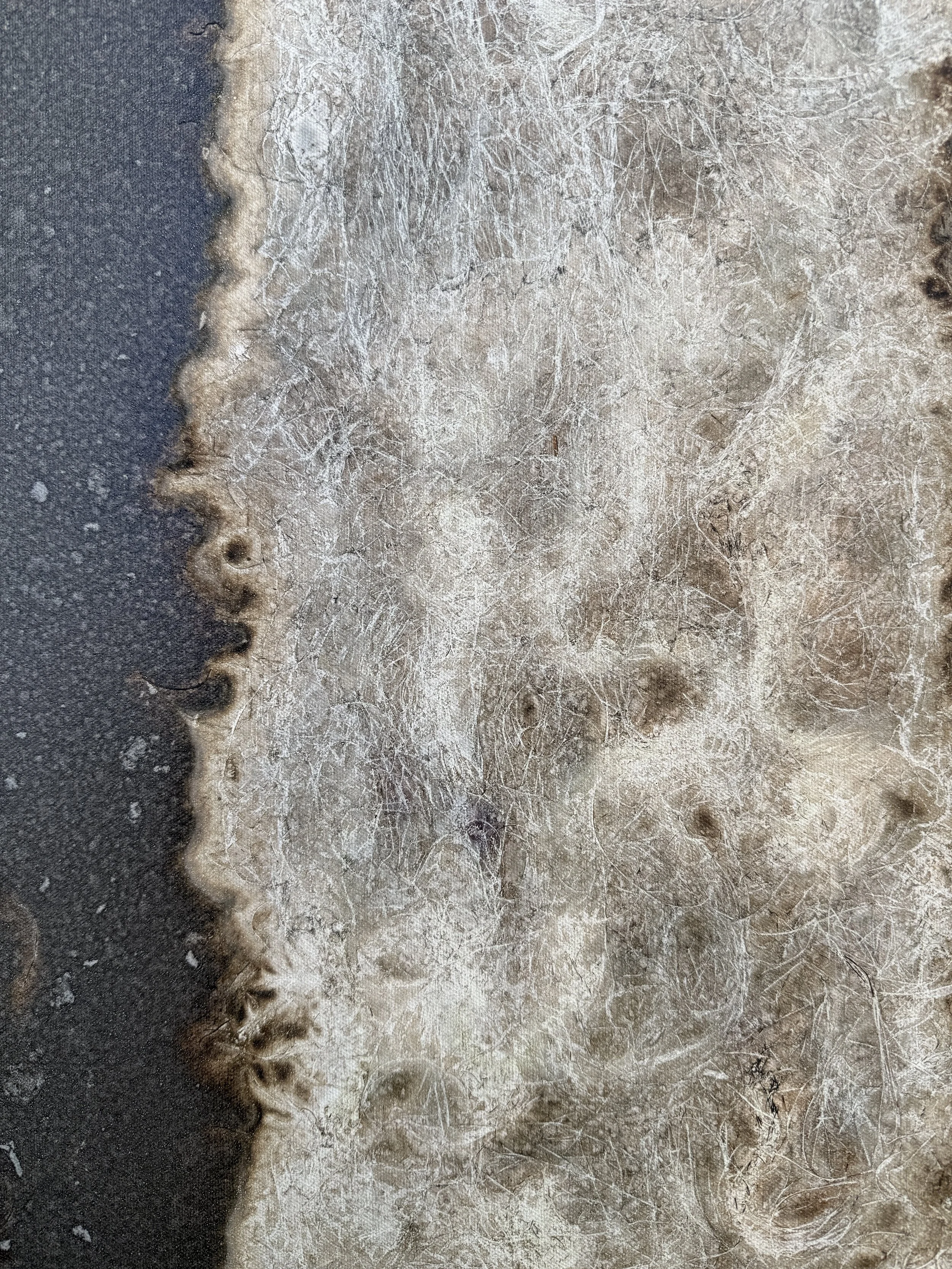 Image 4 of 4
As it turns out, corn silk looks great on canvas. I’ve used it before, but never with melting (aka fugitive) pigments exposed to such intense heat.
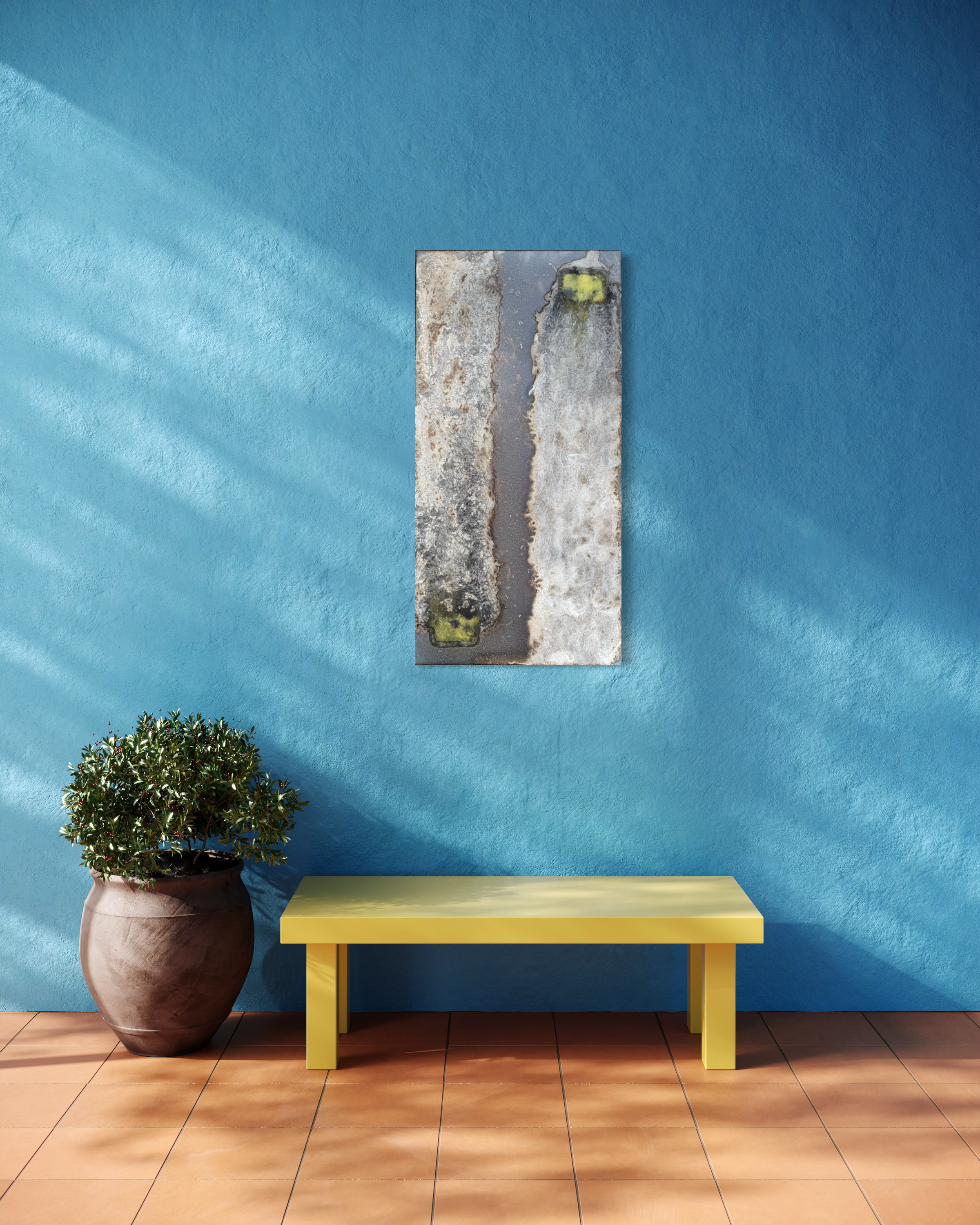
As you can see from the width of the paths created by the melting ice, the wetness of the corn silk played a huge role in the final composition. The silk had dried substantially before the second block of ice was added, allowing it to absorb the pigment much more easily.
This material, and the variability of those melting paths, demonstrate the exact time of year this piece was made. And to me, that’s what makes it special.
As it turns out, corn silk looks great on canvas. I’ve used it before, but never with melting (aka fugitive) pigments exposed to such intense heat.
As you can see from the width of the paths created by the melting ice, the wetness of the corn silk played a huge role in the final composition. The silk had dried substantially before the second block of ice was added, allowing it to absorb the pigment much more easily.
This material, and the variability of those melting paths, demonstrate the exact time of year this piece was made. And to me, that’s what makes it special.